
Not-So-Fun Facts About Termites
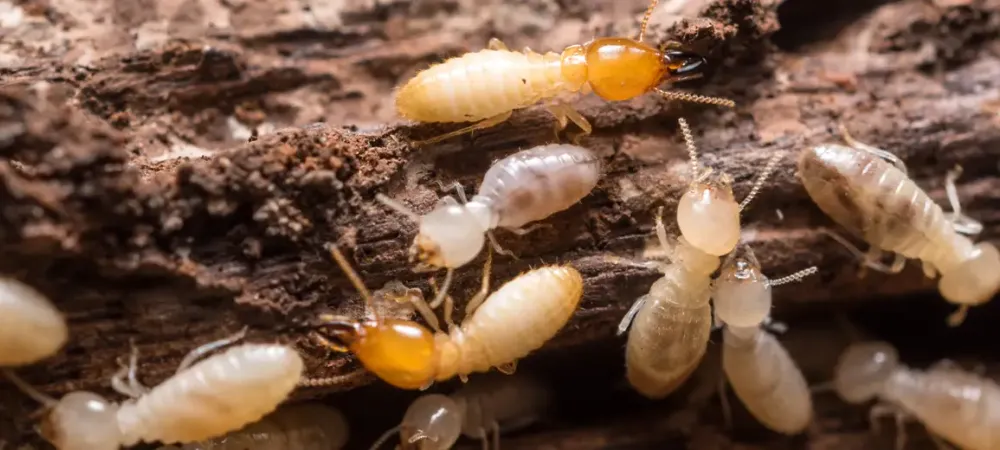
Most homeowners worry about visible threats. Termites aren't one of them, and that's exactly what makes them dangerous. By the time most people realize they have a termite problem, the damage is already done.
Quick Overview
- U.S. property owners spend more than $2 billion annually treating termites, according to the EPA, and total damage and control costs reach an estimated $5 billion per year.
- Subterranean termites are the primary threat to Virginia homeowners. They build underground colonies, travel through mud tubes, and can hollow out structural wood for years before detection.
- Termites leave specific physical clues: mud tubes, hollow-sounding wood, discarded wings, and frass. Knowing what to look for is the first step in catching an infestation early.
When homeowners think about pest threats, termites often don't come to mind immediately. They don't fly across your kitchen, bite you in your sleep, or build visible nests in your yard. They work in silence, inside walls and beneath floors, consuming the structural wood that holds your home together.
At Barrett Pest & Termite Services, termite control is a core part of what we do. In 29 years serving Winchester, VA and the surrounding region, we've seen firsthand what unchecked termite activity does to a home. Here's what every homeowner in our area should know.
How Much Damage Do Termites Cause Each Year?
The financial scale of termite damage in the U.S. is significant. According to the EPA, property owners spend more than $2 billion annually just on termite treatment. When structural damage and repair costs are factored in, USDA Forest Service research puts total U.S. costs at an estimated $5 billion per year.
Termites feed on cellulose, the organic compound found in wood, paper, and cardboard. This appetite doesn't distinguish between a piece of old furniture in the garage and the load-bearing joists in your crawl space. Left undetected, a termite colony can quietly compromise a home's structural integrity over the course of years.
One detail that makes termite damage particularly costly: it is not covered by standard homeowners insurance policies. Treatment and repairs come entirely out of pocket. Early detection through regular professional inspections is the most reliable way to limit those costs. See our termite control services page for details on what a professional inspection involves.
What Types of Termites Should Virginia Homeowners Know About?
There are three primary termite groups that affect U.S. structures: subterranean, drywood, and dampwood. Each has different habits, different warning signs, and requires a different treatment approach.
Subterranean Termites
Subterranean termites are the dominant termite threat in Virginia and throughout the Mid-Atlantic. Virginia Tech Cooperative Extension describes these termites as having a "cryptobiotic" or hidden lifestyle: they stay beneath the soil surface, inside wood, or within their mud tunnels, making them nearly invisible until damage becomes evident or swarming occurs.
These colonies build underground nests and travel to wood through mud tubes, pencil-width tunnels made from soil, wood particles, and saliva. Subterranean termites typically enter homes through foundation cracks, utility conduits, expansion joints, and plumbing connections. Colonies can contain hundreds of thousands of workers and cause severe structural damage in three to five years under active conditions.
Drywood Termites
Drywood termites don't require soil contact or an external moisture source. They live entirely within the wood they consume, which means they can infest structural beams, furniture, and framing in any part of a home. Their colonies are much smaller than subterranean species, rarely exceeding a few thousand individuals, but they can still cause significant localized damage over time. Drywood termites are less common in Virginia than subterranean species but are occasionally introduced through infested furniture or wooden items transported from warmer southern states.
The most reliable sign of drywood termite activity is frass: tiny, hexagonal fecal pellets pushed out through small holes in the wood that resemble fine sawdust or coffee grounds. If you notice small piles of this material near baseboards, windowsills, or wooden furniture, contact a professional immediately.
Dampwood Termites
Dampwood termites require high moisture levels to survive and are typically found in wood that is already water-damaged or decaying. While they're more common in the Pacific Northwest and parts of Florida, any Virginia home with persistent moisture problems, whether from a leaky crawl space, foundation water intrusion, or wood-to-soil contact, can create conditions that attract dampwood species. Addressing moisture problems is both a termite prevention measure and a general structural health issue worth taking seriously.
How Do You Know If You Have Termites?
Termite infestations rarely make themselves obvious until damage is well underway. That said, there are physical signs that can tip off a homeowner or a professional inspector before a problem becomes severe.
Signs of termite activity to look for:
- Mud tubes. Brown, pencil-width tunnels running along foundation walls, basement walls, crawl space joists, or connecting soil to any wooden surface. These are the clearest indicator of subterranean termite activity. If you find one, do not break it and leave it alone. A professional should inspect to determine whether it's active.
- Hollow-sounding wood. Tap on baseboards, floors, door frames, and wooden trim. A hollow or papery sound suggests termites have consumed the interior while leaving only a thin wood or paint surface behind.
- Discarded wings. Reproductive termites, called swarmers, shed their wings after mating. Finding small piles of wings near windowsills, door frames, or on the floor near light sources is a sign that a mature colony is nearby and expanding.
- Frass. Small piles of hexagonal, sawdust-like pellets near wood surfaces indicate drywood termite activity. Unlike subterranean species, drywood termites push their waste out of the wood rather than incorporating it into tunnels.
- Blistered or bubbling paint. Paint that appears to be water-damaged on wood surfaces, without any apparent water source, can indicate termite activity beneath the surface.
- Doors and windows that stick. As termites consume and weaken wood around door and window frames, the structures can warp or settle unevenly, making them difficult to open or close properly.
Virginia Tech Extension notes that most homeowners don't know they have subterranean termites until damage is visible or a swarm occurs. For homes in our area, especially those with crawl spaces, annual professional inspections are the most reliable detection tool available.
Why Are Termites So Hard to Detect Without Professional Inspection?
Part of what makes termites so costly is the nature of their activity. They don't make noise you can hear from across a room. They don't move through areas where people spend time. They work from the inside out, consuming wood along its grain while preserving the outer surface, which means structural damage can be extensive before anything visible appears.
Virginia Tech's research on subterranean termites in the state specifically notes that entry points through foundation areas are often entirely hidden, particularly in homes where brick veneer, stucco, or foam insulation contacts the soil below grade. There is no external evidence of presence until damage is significant.
Regular professional inspections address this limitation. A trained inspector knows where to look: crawl spaces, foundation perimeters, moisture-prone areas, wood-to-soil contact points, and areas with prior moisture damage. For real estate transactions, a Wood-Destroying Insect (WDI) inspection is required in most purchase agreements in our area. Barrett Pest & Termite offers those inspections as well as standalone annual inspections for existing homeowners. Learn more on our real estate services page.
What Can Homeowners Do to Reduce Termite Risk?
No prevention strategy eliminates termite risk entirely, but several practices meaningfully reduce the likelihood of infestation and make early detection easier:
- Maintain at least 6 to 8 inches of clearance between any wood on your home's exterior, including siding, deck posts, and door frames, and the soil.
- Fix moisture problems promptly. Leaky pipes, poor drainage, and inadequate crawl space ventilation all create conditions that attract subterranean and dampwood termites.
- Remove cellulose debris near your foundation: old wood piles, lumber scraps, dead stumps, and cardboard stored in crawl spaces all provide easy food sources.
- Direct water away from your foundation using gutters, downspouts, and proper grading.
- Schedule annual termite inspections, particularly if you have a crawl space foundation, which are more vulnerable than slab construction in our region.
Protect Your Home With a Professional Termite Inspection
Termite damage is almost always cheaper to prevent than to repair. By the time visible structural damage appears, a colony has typically been active for years. The most cost-effective step any Winchester, VA or Eastern Panhandle homeowner can take is scheduling regular professional inspections before any signs of infestation appear.
Contact Barrett Pest & Termite Services today to schedule your termite inspection. Our licensed team serves Winchester, VA, the WV Eastern Panhandle, and surrounding communities with thorough inspections, targeted treatment, and follow-up protection backed by 29 years of local experience.