
What Are Mosquitoes Attracted To?
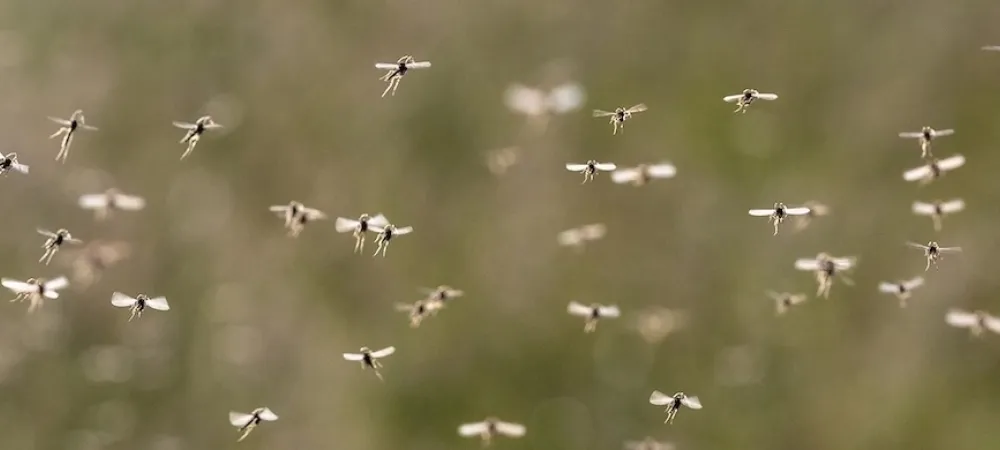
Mosquitoes don't land on you by accident. They're following a trail of signals your body and property are broadcasting around the clock. Knowing what those signals are is the first step toward cutting them off.
Fast Facts
- Standing water is the single most controllable mosquito attractant on your property. Eliminating it removes breeding habitat entirely.
- Mosquitoes detect humans from up to 30 feet away using carbon dioxide from your breath, then zero in using lactic acid in sweat and body heat.
- Dense ground cover and thick brush give mosquitoes a shaded, moist refuge during daylight hours, directly raising the population near your home.
What Are Mosquitoes Attracted To?
As spring arrives in the Shenandoah Valley and Eastern Panhandle, mosquito activity picks back up fast. In our 29 years providing pest control across Winchester, VA and the surrounding region, we've seen how quickly a property can go from manageable to miserable once conditions line up in a mosquito's favor. The good news is that most of those conditions are ones you can change.
Understanding what draws mosquitoes in gives you a real advantage. This guide covers the four main attractants, what you can do about each, and when it's time to call in professional mosquito control.
Why Are Mosquitoes Such a Problem in Virginia?
Mosquitoes aren't just a nuisance. According to the CDC, there are over 3,700 mosquito species worldwide, and in the United States, about a dozen of the more than 200 species are capable of spreading diseases including West Nile virus, dengue, and Eastern equine encephalitis. That distinction matters: most mosquitoes are just irritating, but the ones that transmit pathogens are a genuine health concern, particularly during late spring and summer when populations peak.
Our region's mix of humid summers, seasonal rainfall, and wooded terrain creates favorable conditions for mosquito populations. Knowing what mosquitoes are attracted to and how they behave makes prevention far more targeted and effective.
How Do Mosquitoes Find You?
Mosquito host-seeking is a layered process. At long range, up to 30 feet or more, they detect carbon dioxide from your breath. As they get closer, lactic acid and other compounds from your skin take over. Body heat and humidity confirm the target at close range. Each step of that process is a signal you're broadcasting, and each one can be partially disrupted.
Only female mosquitoes bite. They need a blood meal to produce eggs, and they've evolved remarkably efficient sensory systems to find one. Understanding the full picture explains why simply wearing repellent helps but doesn't tell the whole story of why mosquitoes are swarming your yard in the first place.
What Attracts Mosquitoes to Your Property and Body?
1. Standing Water
Standing water is the most controllable mosquito attractant around any home. Mosquitoes lay eggs near still water, and larvae develop there before emerging as adults. The CDC recommends emptying and scrubbing any containers that hold water at least once per week, because that's enough to disrupt the breeding cycle before eggs can hatch.
Common sources of standing water on residential properties include:
- Old tires: They collect rainwater and block sunlight from drying it out, making them a persistent breeding site.
- Clogged gutters: Debris-filled gutters hold water for days or weeks after rain. This is one of the most overlooked mosquito sources near a home's foundation.
- Birdbaths, flowerpot saucers, and tarps: Any container that holds even a small amount of water can support mosquito breeding. Replace birdbath water weekly.
- Low-lying yard areas: Poor drainage that creates soggy patches after rain gives mosquitoes a natural breeding ground close to your home.
Draining standing water and keeping your property tidy is the most direct mosquito control step a homeowner can take. If you're still dealing with significant mosquito pressure after doing this, professional mosquito services can assess what's driving activity and apply targeted treatment.
2. Dense Ground Cover and Overgrown Vegetation
Mosquitoes are largely inactive during the heat of the day. They shelter in cool, shaded, humid areas, and thick brush, overgrown weeds, and dense groundcover provide exactly that. We've consistently found that properties with unmaintained vegetation near the house have higher resting mosquito populations, which translates directly to more bites when residents are outdoors in the morning and evening.
Practical steps to reduce mosquito harborage include:
- Mow regularly and keep grass trimmed.
- Clear overgrown shrubs and ground cover, particularly along fence lines and the perimeter of the home.
- Remove leaf piles and yard debris promptly, as these also retain moisture.
- Trim back tree branches that create dense shade near outdoor living areas.
A well-maintained lawn and yard doesn't eliminate mosquitoes, but it significantly reduces the daytime resting habitat that supports a large local population. For context on related pest activity that thrives in the same conditions, see our post on best practices for mosquito control.
3. Body Sweat, Odor, and Skin Chemistry
This is where mosquito attraction gets more personal. Research has confirmed that mosquitoes are attracted to lactic acid, a compound found in human sweat, as well as ammonia and other volatile acids produced when skin bacteria metabolize sweat. The CDC notes that mosquito antennae are specifically adapted to detect these chemical signals. People who sweat more, or whose skin chemistry produces higher concentrations of these compounds, are simply more attractive targets.
Practical steps to reduce personal attractiveness to mosquitoes:
- Apply an EPA-registered insect repellent containing DEET, picaridin, or oil of lemon eucalyptus when spending time outdoors.
- Shower after exercise or outdoor activity to reduce lactic acid buildup on skin.
- Wear loose, light-colored clothing that covers arms and legs when mosquito pressure is high.
- Avoid heavy physical exertion outdoors during peak mosquito hours, which are typically dawn and dusk.
4. Carbon Dioxide From Your Breath
Every time you exhale, you're sending a signal to any nearby mosquito. Carbon dioxide is the primary long-range cue mosquitoes use to detect a potential host, activating their host-seeking behavior from distances of 30 feet or more. Once activated by CO2, they become more sensitive to the lactic acid and other skin odors that guide them to a specific person.
When you're exercising, you breathe more frequently and exhale more CO2, which is why strenuous outdoor activity tends to bring on heavier mosquito attention. There's nothing practical you can do to stop exhaling, but limiting exposure during high-activity periods outdoors and keeping repellent applied makes a real difference.
What Can I Do Myself to Reduce Mosquitoes?
A fair amount of mosquito prevention is within reach for most homeowners. Eliminating standing water, maintaining the yard, and using repellent during outdoor activities are all effective and require no special equipment. These steps reduce breeding habitat and personal attractiveness to mosquitoes, which lowers your overall exposure.
That said, mosquito populations don't respect property lines. If neighboring lots have standing water, wooded areas backing your yard create abundant harborage, or you're near natural water features, your own property management will only go so far. In those situations, professional treatment becomes the more reliable solution.
When Does Mosquito Control Require Professional Treatment?
If you've addressed standing water and vegetation and mosquitoes are still a significant problem, that's a clear signal that the source is beyond what property maintenance alone can solve. At Barrett Pest & Termite Services, our mosquito control services use targeted treatment methods applied to the areas where mosquitoes rest and breed. Foliage, shrub beds, and fence lines are typical treatment zones where resting populations concentrate.
We've found that a combination of property-level prevention by the homeowner and professional barrier treatment delivers the best long-term results. Professional treatment reduces the active population, and your ongoing maintenance keeps it from rebounding as quickly between services.
How Do You Keep Mosquitoes Away Long-Term?
Mosquito pressure builds through spring and peaks in summer before tapering off in fall. Here in Virginia, that window is roughly May through September. The most effective approach is to start prevention early before populations peak.
What we tell homeowners for long-term mosquito management:
- Make standing water elimination a weekly habit during mosquito season, not a one-time fix.
- Keep gutters cleaned through the warmer months to prevent water retention near the roofline and foundation.
- Consider professional barrier treatments on a scheduled basis to maintain population control through the season.
- If you have a pond or water feature, treat it with a biological larvicide (Bti) or introduce mosquito fish to control larval development naturally.
Ready to Reduce Mosquito Pressure Around Your Home?
Barrett Pest & Termite Services serves homeowners across Winchester, VA, Berryville, Strasburg, and the Eastern Panhandle of WV with dependable, results-focused pest control. Our mosquito services are backed by a satisfaction guarantee: if pests return between scheduled treatments, we come back and re-treat at no additional cost.
Schedule Your Free Mosquito Consultation Today
Don't wait until mosquito season is in full swing to take action. Contact Barrett Pest & Termite Services to schedule your free on-site consultation. Our team will assess your property, identify the conditions driving mosquito activity, and put together a plan that gives your family the outdoor space back. Call us today or use our online form to get started.